Invoice vs Receipt: What's the Difference? Examples and When to Send Each
Understand invoices versus receipts, how to document deposits and partial payments, and what to send customers before and after payment.
An invoice requests payment; a receipt confirms it
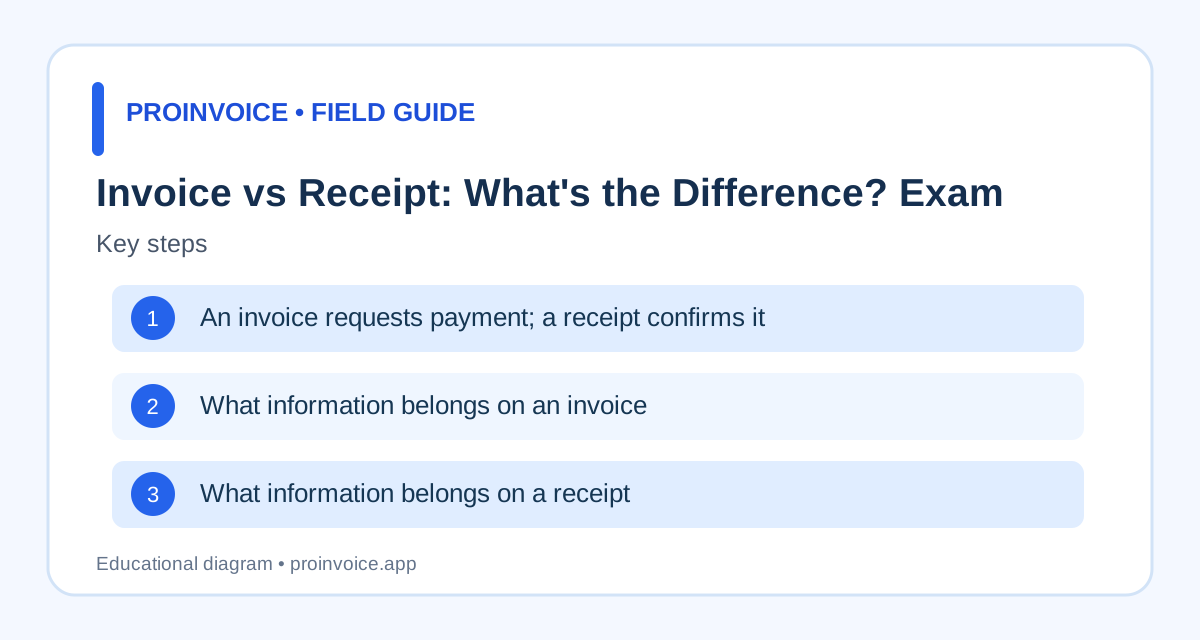
The simplest distinction is timing and purpose. An invoice tells a customer what is owed, why it is owed, and when payment is due. A receipt records that payment was received for a transaction. An invoice can exist before any money changes hands. A receipt should not imply money was collected when it was merely requested. These documents may reference the same job or order, but they answer different questions. For example, a consultant sends a $600 invoice after completing agreed work. When the customer pays the $600, the consultant provides an appropriate payment confirmation or receipt. A quote or estimate is different again because it proposes work and a price before the amount becomes billable. Read estimate versus invoice for the earlier stage.
What information belongs on an invoice
A clear invoice includes the seller and customer, unique invoice number, issue date, due date, description of goods or services, quantities or rates when relevant, applicable adjustments, and the remaining balance due. Add a job address or purchase order reference when needed. Payment instructions should be secure and easy to follow. If a deposit was already collected, show it as a credit rather than asking for the full amount again. Do not label a document paid because the customer clicked a checkout link. Verify that the transaction succeeded. An invoice helps the customer approve payment and helps the business track accounts receivable. Use invoice templates to choose a layout that matches the service.
What information belongs on a receipt
A receipt usually identifies the seller, payment date, amount received, goods or services or invoice reference, and payment method where appropriate. It may also show applicable tax details or remaining balance, depending on the transaction and local requirements. A receipt should not expose complete card numbers or sensitive payment credentials. If a customer paid only part of an invoice, the receipt should make clear that it confirms a partial payment rather than settlement of the entire balance. Keep the transaction reference available for reconciliation. Receipt and record-retention rules vary by jurisdiction and industry, so check applicable requirements. A customer may need a receipt for reimbursement, accounting, or warranty purposes even after the invoice is marked paid.
Example: a service job from invoice to receipt
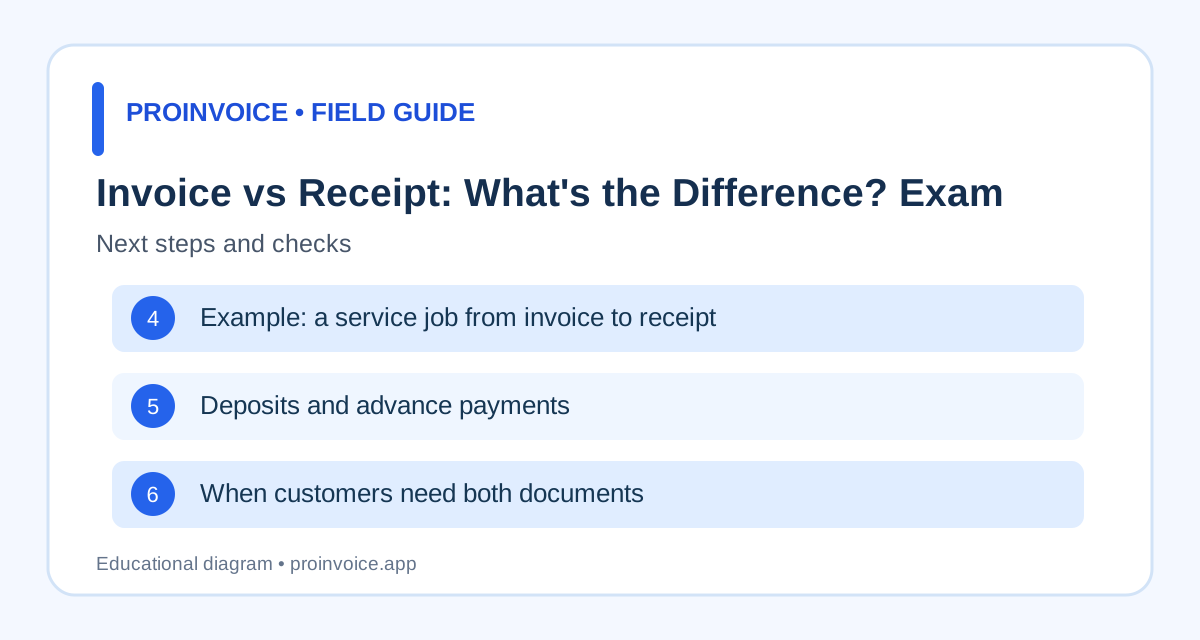
Suppose a contractor completes an agreed $900 repair and sends an invoice showing $900 due within the contract's payment period. The customer pays $300 first. The business records a $300 payment and can issue a receipt for that amount, while the invoice shows a $600 remaining balance. When the customer later pays the remaining $600, another receipt or confirmation documents that transaction and the invoice becomes fully paid. These are illustrative amounts without taxes or additional adjustments. The key is to avoid presenting the first $300 receipt as proof that the full $900 was paid. Keep both payments associated with the same invoice and preserve the original agreed scope. The unpaid invoice guide explains what to do if the remaining amount becomes overdue.
Deposits and advance payments
A deposit can occur before the final invoice, depending on the agreement. Record the payment and provide suitable confirmation. Later invoices should show how the deposit applies to the total. For example, a $2,000 project with a $500 deposit leaves $1,500 before taxes, approved changes, or other payments. The deposit receipt documents the $500 collected; it does not mean the project has been completed. Contract terms and jurisdiction-specific laws can affect how deposits are collected and refunded. Residential construction often has additional rules. Do not use an invoice or receipt to override an applicable contract requirement. Review deposit collection for practical recordkeeping considerations.
When customers need both documents
Businesses commonly send an invoice before payment and a receipt afterward, but some point-of-sale transactions provide a receipt without a separate invoice. A recurring business customer may require invoices for accounts payable and receipts or confirmations for audit records. A homeowner may request a paid invoice as proof of settlement. Whatever the format, make sure the document clearly distinguishes the original charge from the money received. If a refund occurs, record it rather than leaving an unqualified paid status that no longer tells the full story. Retain invoice and payment records according to legal and accounting requirements. A clear paper trail reduces disputes about whether a charge was authorized or paid.
Avoid common invoice and receipt mistakes
Do not issue a receipt before confirming payment. Do not send a new full-balance invoice after a partial payment without crediting it. Do not confuse the processor's net bank payout with the gross amount the customer paid, because fees may have been deducted. Keep invoice numbers and payment references consistent. When correcting a document, preserve a traceable record rather than silently deleting the original. Check tax and recordkeeping requirements for your jurisdiction, especially when issuing documents for business reimbursement. For a practical workflow, start with creating an invoice, use payment links when properly configured, and reconcile each payment before marking the balance settled.
What a paid invoice means
A paid invoice is an invoice whose balance has been settled according to the business's records. It can serve as useful confirmation, but the record should be based on a verified payment rather than a customer's statement that they clicked a link. If a payment is pending, disputed, reversed, or refunded, the status may require adjustment. A receipt documents a particular payment transaction; a paid invoice can summarize the settlement of the underlying bill. For a single-payment service job, these may look similar to the customer. For installments, they are different: several receipts may correspond to one invoice. Keep transaction references and dates so you can explain how the invoice became fully paid. When a customer requests proof of payment, provide a document that accurately reflects what was received.
How invoices and receipts affect bookkeeping
An invoice often establishes an amount receivable under the business's accounting method and applicable rules, while a receipt provides evidence of payment. The exact accounting treatment depends on cash versus accrual methods, tax requirements, and the nature of the transaction. Do not assume issuing an invoice always means cash is available in the bank. A card payment may be confirmed before a processor payout arrives, and the payout may be net of fees. Reconcile the gross customer payment to the invoice and record processing charges separately. For refunds or reversals, update the relevant records rather than leaving a misleading paid status. Consult an accountant for business-specific tax recognition questions. Accurate documents make financial reporting more reliable even when the business uses simple bookkeeping.
When a receipt is not enough for a customer
Some customers need an itemized invoice to approve expenses, even if they have a payment receipt. A receipt showing only a transaction amount may not identify the services, project, purchase order, or tax details their accounting department requires. Ask what documentation the customer needs before sending repeated generic confirmations. A contractor may provide an invoice listing labor and materials and a receipt confirming the deposit or final payment. A freelancer may provide an invoice for the agreed milestone and a separate payment confirmation. Avoid inventing tax identifiers or claiming that a simple receipt satisfies every legal requirement. The goal is to document both what was charged and what money actually changed hands.
How to document refunds and adjustments
Suppose a customer paid a $500 invoice and the business later agreed to refund $75. The original payment receipt remains evidence that $500 was collected, while the refund should be documented separately and reflected in the accounting record. Do not silently replace the original receipt with a new document suggesting only $425 was ever received. Depending on local requirements, a credit note or other adjustment may be appropriate. Record the refund date, amount, method, and transaction reference. If a customer disputes only part of a bill, keep the disputed amount and any agreed adjustments clear. Transparent corrections are especially important when several payments or employees are involved.
A simple document decision checklist
Before sending a document, ask what happened in the transaction. Is the customer reviewing a proposed price? Send an estimate or quote as appropriate. Is an agreed amount now due? Send an invoice. Has the customer paid a deposit or installment? Provide a suitable receipt or confirmation for that payment and update the invoice balance. Has the full amount been received and verified? Mark the invoice paid and provide the requested confirmation. Has money been refunded? Record the refund and any necessary adjustment. The correct document depends on the event, not which template is easiest to open. Keeping these distinctions consistent makes disputes and bookkeeping questions much easier to resolve.
Invoice versus receipt for cash payments
Cash transactions require accurate records just as card payments do. If a customer pays cash after a service call, record the date, amount, service, and relevant invoice reference, and provide a suitable receipt where required or requested. Do not mark a different customer's invoice paid because the amounts happen to match. For partial cash payments, show the remaining balance clearly. Keep cash-handling controls appropriate to your business and reconcile collected amounts with the records. Local tax and receipt rules may apply, so verify the requirements for your jurisdiction. An invoice explains the charge; the cash receipt confirms what was actually received. Those functions remain distinct even when both documents are issued on the same day.
Invoice versus receipt for online card payments
A successful card payment may generate a processor confirmation, but the business still needs to associate that transaction with the correct invoice. Confirm the amount, merchant, date, and transaction reference. The processor's payout may arrive later and may deduct fees, so the bank deposit can differ from the amount shown on the customer's receipt. If a transaction is disputed or refunded, update the records and retain the original confirmation and adjustment. Avoid treating a pending checkout attempt as a completed payment. For installments, provide confirmation for each payment and keep the invoice's remaining balance accurate. A clear system prevents customers from receiving overdue notices for amounts they already paid.
What to send when a customer asks for proof of payment
First ask whether the customer needs a receipt for a specific transaction, a paid invoice for the entire job, or an itemized record for reimbursement. A payment receipt should identify the actual amount received and date. A paid invoice can show the original services and the settled balance, provided payment has been verified. If the customer paid a deposit but still owes money, do not label the full project paid. If a refund was issued, provide the relevant adjustment documentation as appropriate. Keep sensitive payment information masked and use secure delivery methods. Understanding the request helps avoid sending a document that looks official but does not satisfy the customer's accounting needs.
Receipts for business expenses and reimbursements
Employees and contractors may need proof of payment to request reimbursement. A receipt can confirm the amount paid, date, merchant, and nature of the purchase. An unpaid invoice alone generally does not demonstrate that an expense was settled. Some employers or tax authorities require particular details or supporting documentation, so check the relevant policy rather than assuming every receipt format is sufficient. If an invoice contains several items and only one was paid, make that distinction explicit. Protect payment details by masking card information and sharing documents through appropriate channels. Clear documentation helps the person reviewing the expense determine both what was purchased and whether payment occurred.
How to avoid sending misleading paid confirmations
Do not mark an invoice paid merely because a customer clicked a payment button or forwarded a bank transfer screenshot. Verify the transaction through the relevant payment or bank records. Some methods have delayed confirmation, and refunds or disputes can change the status later. If payment is pending, communicate that status accurately. When a partial payment arrives, issue a confirmation for the actual amount and update the outstanding balance. If a customer disputes a paid label, review the transaction history and correct errors promptly. Reliable status updates prevent confusion and protect both the customer and the business from duplicate payment requests.